Real Life UPI Fraud Case Study | Cybersecurity Awareness
A REAL-LIFE CYBER FRAUD ENCOUNTER
One transaction, one hour, and the importance of everyday cyber awareness
1. TL;DR
A real life encounter with a frontline security professional who experienced an unauthorised UPI transaction highlights why cybersecurity awareness matters to everyone. From identifying suspicious transactions to reporting financial fraud through India’s Cyber Crime Helpline 1930, this case study explains the importance of immediate action, digital payment security, SIM swap awareness and protecting email accounts. Cybersecurity is not just for IT professionals. It is for every individual who uses digital payments.
This case study describes an encounter with a frontline security professional who sought help after noticing an unfamiliar UPI transaction. It highlights the importance of acting quickly, using official reporting channels, and making cybersecurity awareness accessible to everyone.
1. The incident: An unexpected conversation
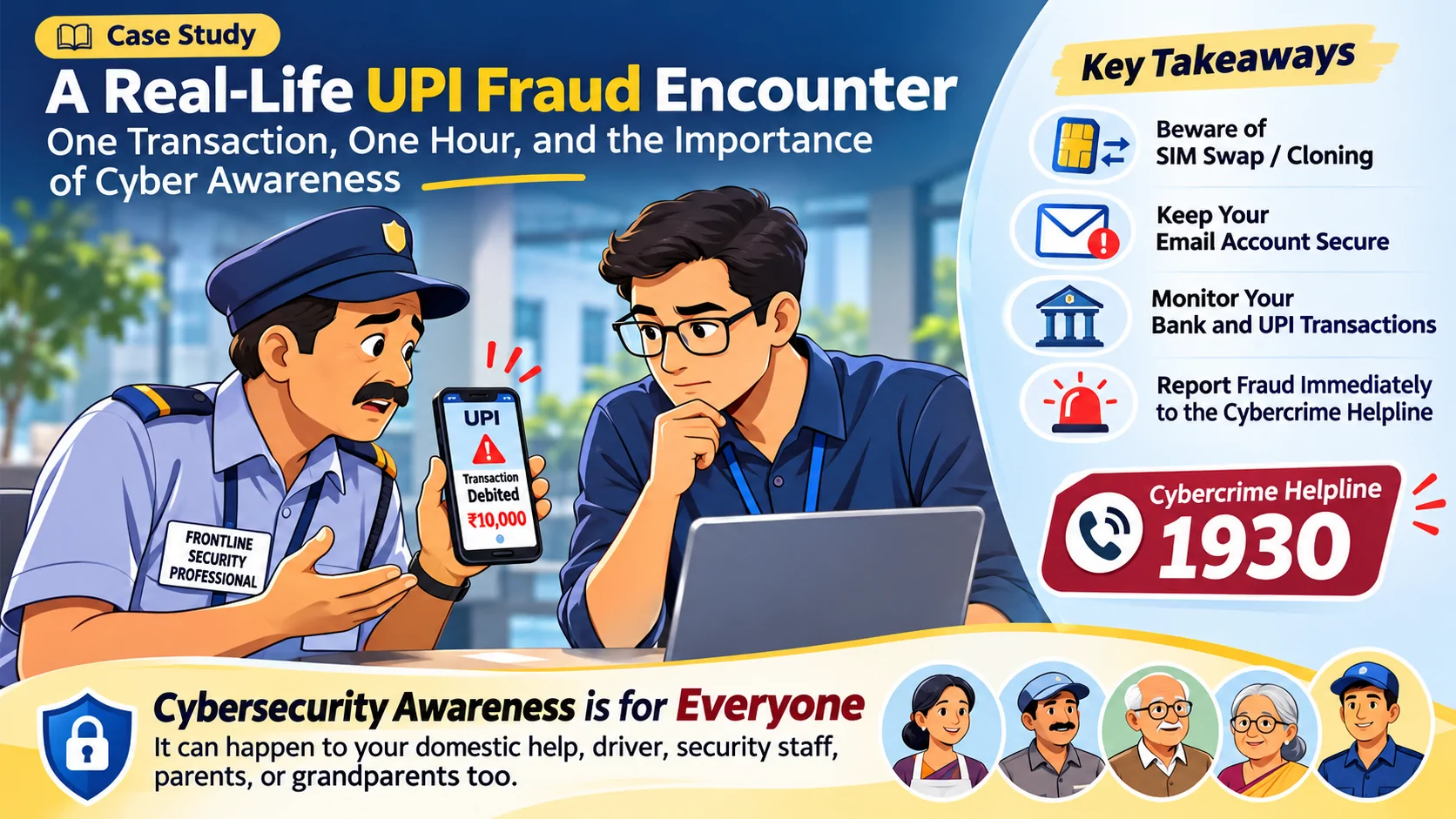
The suspicious UPI transaction is reviewed
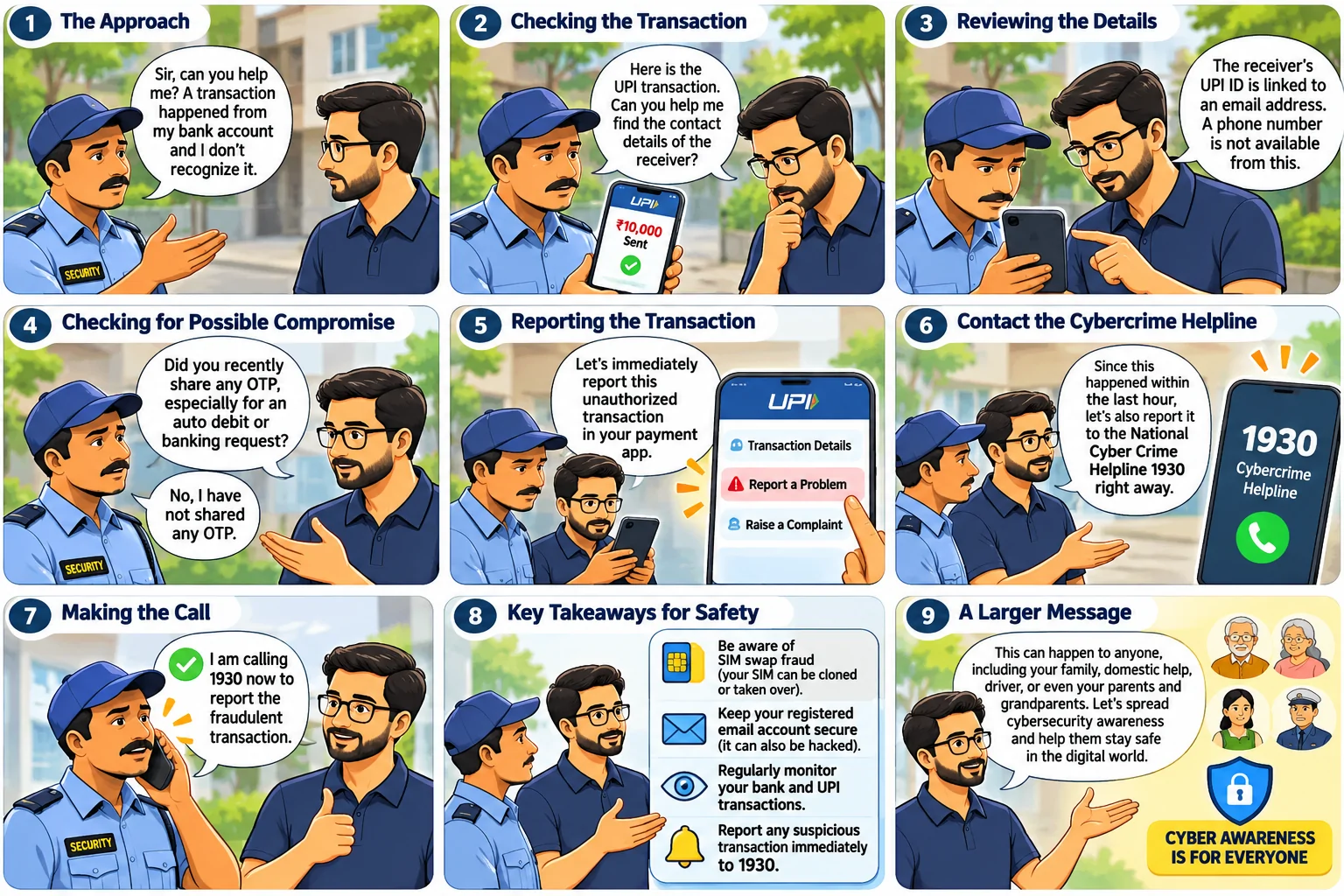
Recently, a frontline security professional approached me and showed me a UPI transaction on his mobile phone. He explained that money had been debited from his bank account and asked whether I could identify the recipient’s contact details from the transaction information.
What initially appeared to be a simple request turned into an important cybersecurity awareness exercise.
2. What happened next?
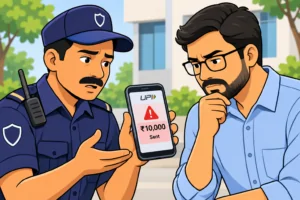
Checking whether an OTP was shared
Attempting to identify the recipient
I examined the transaction details and noticed that the receiver’s UPI ID appeared to be associated with an email address. However, the mobile number could not be identified from the information available in the transaction.
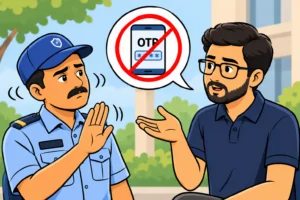
Checking for possible account compromise
I asked whether he had recently shared any OTP, particularly in connection with an auto-debit mandate or banking request. He said that he had not shared any OTP. That answer did not, by itself, rule out account or device compromise.
Reporting the suspicious transaction
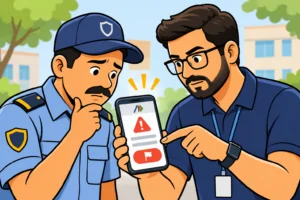
Taking immediate action
Rather than spending time trying to identify the recipient, I advised him to raise a complaint immediately through the payment application. Since he said the transaction had occurred within the previous hour, I also advised him to call India’s National Cyber Crime Helpline at 1930 without delay.
3. Why immediate reporting matters
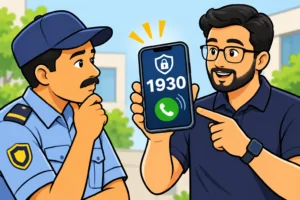
Guidance on contacting the 1930 helpline
The objective of reporting quickly is to give the bank, payment intermediaries and the relevant authorities an opportunity to trace the transaction and, where possible, place a hold on funds before they are withdrawn or moved further. A prompt complaint can improve the possibility of intervention, but it does not guarantee recovery.
Recovery depends on the circumstances of the case, whether the funds can be traced or secured, the response of the financial institutions concerned, and the outcome of the investigation.
4. Cybersecurity lessons from this incident
Be alert to SIM-swap fraud
SIM-swap fraud can allow an attacker to take control of a victim’s mobile number and receive calls or SMS messages, including OTPs. Watch for unexpected loss of mobile network connectivity and contact your telecom provider immediately if it occurs.
Secure your registered email account
A compromised email account may expose sensitive communications, password-reset links and email-based verification codes. Use a strong, unique password and multi-factor authentication where available.
Monitor bank and UPI activity
Check bank statements, UPI transaction history and account notifications regularly. Treat any unfamiliar transaction, even a small one, as a reason to investigate.
Report suspicious transactions immediately
Contact your bank, raise a complaint through the payment application, and call 1930 as soon as possible. Preserve transaction IDs, screenshots and complaint acknowledgement details.
Official reporting channels: National Cyber Crime Reporting Portal — https://cybercrime.gov.in/ | National Cyber Crime Helpline — 1930.
5. The bigger picture: Cybersecurity awareness is for everyone
This is a familiar topic for cybersecurity professionals. We regularly discuss phishing, OTP theft, SIM swaps, account compromise and financial fraud. What made this incident stand out was the person who approached me: a frontline security professional with limited exposure to cybercrime reporting procedures.
It made me think about the people around us who may face the same situation:
Domestic helpers and housekeepers
Drivers and delivery personnel
Office support staff
Parents and grandparents
Anyone who uses digital payments but may not know how to report fraud
Would they recognise a suspicious transaction? Would they know whom to call? Would they know what information to preserve? Cybersecurity awareness must reach beyond IT teams and corporate employees.
6. The illustrated incident sequence
The following nine illustrations present the incident in sequence, from the first conversation through reporting and the wider awareness message.
9. Cyber awareness is for everyone
7. Key takeaway
Cybersecurity awareness should never be restricted to IT teams, corporate employees or technology professionals. It must extend to every individual who uses a smartphone, makes digital payments or maintains a bank account.
We often discuss sophisticated cyberattacks, advanced security tools and enterprise protection strategies. However, real cybersecurity begins with everyday awareness and the ability to recognise when something is wrong.
A domestic helper, a driver, a frontline security professional, an office support employee or an elderly family member could become the next target.
Sometimes, preventing further damage does not require sophisticated technology. It starts with a simple conversation, the right guidance and one timely phone call.
Let’s take cybersecurity awareness beyond our workplaces and into our homes, families and communities.
Because protecting people begins with educating people.
Cybersecurity is not just an IT responsibility. It is everyone’s responsibility.
MAKE CYBERSECURITY AWARENESS A HOUSEHOLD HABIT, NOT JUST A CORPORATE POLICY.
Note: This case study reflects a personal experience and general awareness guidance. It does not establish the cause of the transaction or guarantee reimbursement. Always follow instructions from your bank and official cybercrime reporting channels.
Swaroop KN
Growth Leader | Cybersecurity Compliance and Audit